
Learn about
CoopeTarrazú Coffee
Our Cooperative's coffee is produced in a sustainable way, with traditional methods and care by our associates. We offer a high quality coffee, with unique flavors and an unmistakable aroma that comes from our land.
In the heart of the Los Santos region, exceptional climatic and agricultural conditions merge for the growth of our plantations, which are carefully cultivated to produce a unique and exquisite coffee.
The coffee bush is a masterpiece of nature. It takes approximately two years to produce its first harvest, but it is not until four years later that it reaches its full productive stability.
During the flowering season, our plantations are dressed in white and emanate an irresistible aroma, while during the harvesting season, the intense red and yellow colors embellish the valleys and mountains.
Our commitment to excellence is reflected in every process, from the harvest until it is served in the cup. The rigorous quality control ensures that each bean retains the characteristics that make Tarrazú coffee unique.
For us coffee is more than a beverage: it is a symbol of passion and pride. We value the hard work of our small coffee growers, who receive fair and equitable treatment to support their families.


Coffee harvesting
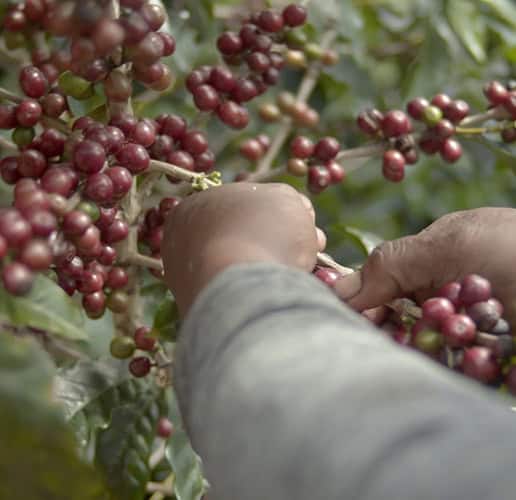
When the trade winds blow in the Los Santos region between October and March, grain harvesting intensifies, which is one of the most beautiful and exciting times for our associates.
For many in the region, coffee harvesting is an intrinsic part of their history and identity, representing the best moments and memories shared among families and communities.
Currently, close to 15,000 immigrants from Nicaragua and Panama join our communities to participate in the bean harvest. In CoopeTarrazú we value the effort of our pickers, guaranteeing a fair and equal payment for each box of coffee harvested.
Our remuneration standards are regulated by the Ministry of Labor and the Costa Rican Coffee Institute (ICAFE), ensuring decent working conditions for all our workers.
Transfer to the receivers
The coffee is delivered by the members to a network of 60 receivers provided by CoopeTarrazú throughout the organization's area of influence. Each producer chooses the nearest collection center for delivery.
Avoiding the transfer to the central plant allows coffee growers more time to extend the harvesting day, saves fuel and reduces the environmental impact by avoiding emissions. The Cooperative transports the coffee in trucks from each receiving plant to the central plant where the industrial process begins.
At this stage, traceability allows us to identify the exact origin of each lot of coffee, which provides quality and consistency of the final product. This is an essential element to attend new trends in the international market and to project a sustainable future for the coffee industry.

Industrial Process
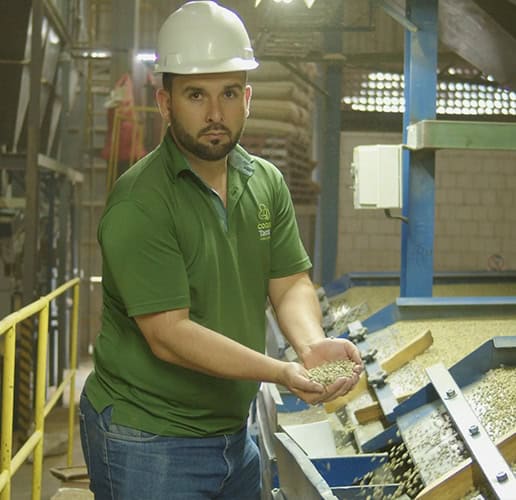
CoopeTarrazú has the capacity to process up to 300,000 bushels of coffee in two plants: Beneficio Central and Beneficio El Marqués. We have one of the largest industrial plants in Central America.
When the bean enters the plant, the coffee undergoes the pulping process, which consists of separating the bean from its shell or pulp. Subsequently, the coffee is washed in order to remove the mucilage.
Next comes the pre-drying and drying stage, which allows the reduction of moisture content in order to proceed to storage in silos. The coffee is dried mechanically under strict quality controls, which guarantees the conservation of the best characteristics for its commercialization.
The in-plant process ensures that end consumers enjoy a consistent sensory experience in every cup they taste.
Coffee enlistment
At the final enlistment stage, it is essential to ensure that the coffee is in its best condition before being shipped to our customers around the world.
The coffee is stored in fresh and ventilated environments, providing an adequate rest that favors the full development of its flavors and aromas.
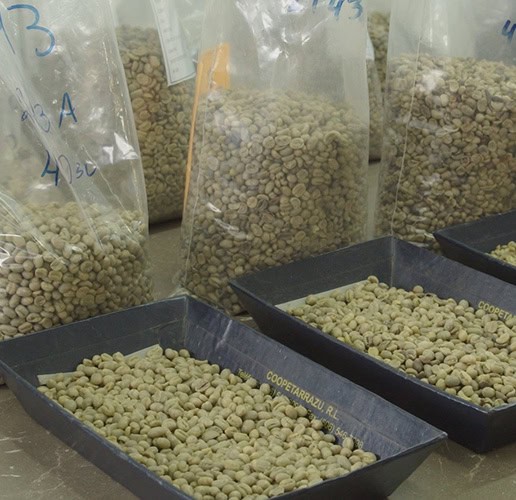
Quality control includes cupping, which is an art in itself where the physical and organoleptic qualities of the coffee are meticulously evaluated, which allows us to characterize each type of coffee that we export.
Factors such as bean weight, size and color are evaluated to meet the needs of our customers. Coffee is exported in 69 kilogram jute bags.
Our commitment to excellence and quality is stamped on every process.
Waste Treatment
At CoopeTarrazú we strictly comply with Costa Rican environmental and sanitary regulations, focusing on continuously improving our processes to adequately manage the waste generated by coffee production.
In recent years, we have managed to implement a system where 100% of the coffee bean pulp residues are composted, which is transformed into organic fertilizer that is returned to our producers.
In addition, we responsibly manage the honey water derived from our industrial process. This water, which has a high organic load, is irrigated in fields covered with star grass. Most of the water evaporates due to the effect of the sun and the rest seeps into the soil.
We are committed to best practices that promote the health of our communities and care for our natural resources.
